: ILA Berlin Farnborough 2026 aerospace quality supplier readiness airshow

ILA Berlin 2026 Recap & Farnborough Preview: What Two Major Airshows Reveal About the State of Aerospace Quality

ILA Berlin 2026 closed its trade visitor days on June 12. The numbers are substantial: more than 600 exhibitors from over 35 countries, 200+ delegations, and 350 speakers across three stages made it the most internationally attended ILA in years. The Supplier Centre ran at full capacity across the three trade days. eVTOL and Advanced Air Mobility featured prominently across multiple exhibition segments.

Now the industry’s attention turns to Farnborough. The Farnborough International Airshow 2026 takes place July 20–24 in Hampshire, UK — and at over 12,000 expected trade visitors, it remains one of the most commercially significant aerospace events on the calendar.

What ILA Berlin 2026 Actually Revealed

Theme 1: Production Rate Pressure Is the Dominant Quality Risk

Every conversation in the Supplier Centre this year came back to the same operational reality: OEMs need more output, faster, without compromising conformance. Airbus’s A320neo family production target of 75 aircraft per month by 2026 — up from approximately 50 per month in 2023 — requires a proportional increase in Tier-1 and Tier-2 capacity.

The suppliers who managed this transition successfully at ILA were those who came with data — specifically, process capability data demonstrating that their critical characteristics remain stable at higher production rates. Those without this data were in a reactive position.

Theme 2: eVTOL Qualification Is Earlier Than Most Suppliers Think

The Advanced Air Mobility segment at ILA generated significant visibility. Several eVTOL developers have now moved from demonstrator programs into type certification activities under EASA’s SC-VTOL framework. Supplier qualification cycles for production-intent parts are beginning now — not in 2028 or 2030.

Suppliers who assumed they had two to three years to prepare their quality systems for eVTOL qualification requirements may need to reassess that timeline. The first SC-VTOL type certificates are expected in the 2027-2028 window.

Theme 3: Sustainability Documentation Is Becoming a Supplier Requirement

Multiple OEM representatives at ILA indicated that Environmental Product Declarations (EPDs) and lifecycle carbon data for purchased components are moving from voluntary reporting to contract requirements. For suppliers, this means quality management systems will need to incorporate environmental data traceability alongside dimensional and materials conformance documentation.

What to Watch at Farnborough 2026

Three specific areas deserve attention at Farnborough 2026:

First — composite structure programs. Both Airbus and Boeing have significant composite content in current and next-generation aircraft. Any new aircraft program announced with high composite content will immediately create qualification demand in the CFRP supplier base.

Second — engine supplier commitments. CFM International, Pratt & Whitney, and Rolls-Royce all have significant delivery backlogs. New commitments at Farnborough add to that backlog.

Third — emerging market airline orders. Airlines from Latin America, Southeast Asia, and the Middle East are expected to be active at Farnborough, creating MRO demand in markets where quality oversight infrastructure is still developing.

3 Concrete Actions Between ILA and Farnborough

→ If you supply composite structures or CFRP components, initiate a production capability review now.

→ Review your EPD and lifecycle carbon documentation capability. If OEM sustainability reporting requirements are moving toward contract terms, your quality system needs to be able to generate this data reliably.

→ Monitor Farnborough order announcements for program implications. Use the order data as a strategic planning input for your own capacity and quality development roadmap.

The Bigger Picture

ILA Berlin and Farnborough together represent the two most commercially significant aerospace events of 2026. The quality management challenge for the supplier base is to be positioned — in terms of process capability, certification readiness, and documentation maturity — to serve those programs when the production demand arrives.

The time to prepare for Farnborough’s commitments is before the ink dries on the order agreements. Not after.

📌 Is your quality and certification framework aligned with the production demands that the 2026 airshow season is generating?

Request a Technical Consultation → www.skqc.org

#ILABerlin2026 #Farnborough2026 #AerospaceQuality #SupplierReadiness #CFRP #eVTOL #ProductionRate #EN9100 #SKQC

Sources

ILA Berlin 2026: https://www.ila-berlin.de/en

Farnborough International Airshow 2026: https://www.farnboroughairshow.com

www.easa.europa.eu/en/domains/civil-drones/regulationsEASA SC-VTOL: https://www.easa.europa.eu/en/domains/civil-drones/regulations


ILA Berlin 2026: The Supplier Hall Is Where Quality Decisions Are Made — Not on the Flight Line

From June 10 to 14, 2026, the global aerospace industry converges at Berlin ExpoCenter Airport for ILA Berlin — Europe’s most significant aerospace trade fair. The numbers for 2026 are substantial: more than 600 exhibitors from over 35 countries, 200+ official delegations, 350 speakers across three stages, more than 100 aircraft in static and flying display, and over 100,000 expected trade and public visitors.

The flying displays will be spectacular. The OEM announcements will dominate the press coverage. But from a Quality Management perspective, the most strategically important part of ILA Berlin 2026 is one that rarely makes headlines: the International Supplier Centre.

This is where the actual quality decisions that determine the structural integrity of aircraft programs are negotiated, reviewed, and committed to.


What the ILA Supplier Centre Actually Represents

ILA Berlin’s International Supplier Centre brings together Tier-1 and Tier-2 suppliers with OEM procurement and engineering representatives in a structured B2B environment. For aerospace suppliers, this is not a trade fair booth exercise. It is a compressed evaluation cycle in which three to five years of relationship-building, qualification activity, and quality performance history is assessed in a matter of days.

The dynamics at the Supplier Centre reflect a structural reality in aerospace manufacturing: OEMs are not primarily looking for new suppliers at ILA. They are evaluating whether their existing suppliers can scale, remain compliant, and absorb the production rate increases that the current aircraft delivery backlog demands.

That context matters. Airbus has a backlog of over 8,700 aircraft as of early 2026. Boeing is working through its own delivery challenges following the regulatory scrutiny of 2024 and 2025. Both programs require Tier-1 suppliers to increase output while maintaining conformance quality — a combination that is structurally difficult and historically where non-conformance rates rise.


Three Quality Questions Every Supplier Should Be Able to Answer at ILA

Whether you are attending ILA Berlin 2026 or monitoring it from a distance, these are the three questions that define supplier quality credibility in the current aerospace environment:

1. What is your First Article Inspection (FAI) completion rate for new part numbers introduced in the last 18 months?

AS9102 First Article Inspection is the baseline conformance gate for new part introduction in aerospace. In periods of rapid production ramp-up, FAI completion rates are frequently the first quality metric to degrade. OEMs know this and increasingly use FAI completion data as a leading indicator of supplier readiness. If your FAI backlog has grown in the last two quarters, that is a signal — and it will be visible in the next audit.

2. How many of your current non-conformances have been open for more than 30 days?

Corrective action cycle time is the single most reliable indicator of quality system health in an operational environment. A supplier with a strong QMS closes non-conformances within defined timescales because root cause analysis and corrective action planning are embedded in the daily workflow — not treated as administrative tasks. If the average age of your open NCRs is trending upward, your quality system is losing ground, regardless of what your certification certificate says.

3. Can you demonstrate process capability (Cpk) data for your critical characteristics?

In the current environment, OEM expectations have shifted from attribute-based quality evidence to variable data. Demonstrating Cpk ≥ 1.33 for critical characteristics is increasingly a pre-condition for production approval — not a post-qualification exercise. Suppliers who cannot produce current, program-specific process capability data at a customer meeting are already behind the qualification threshold.


What ILA 2026 Signals for Supplier Quality Development

ILA Berlin 2026 has explicitly included Advanced Air Mobility and eVTOL in its sector coverage for the first time at this scale. This is industrially significant for quality management professionals because it signals the beginning of a supplier qualification cycle for a completely new class of aircraft — one that will require adaptation of existing aerospace quality standards to new propulsion concepts, new material combinations, and new operational profiles.

The EASA certification framework for eVTOL (Special Condition VTOL, SC-VTOL) is still being actively developed. Suppliers who begin positioning their quality systems for SC-VTOL requirements now — rather than waiting for the first contract — will have a structural advantage in the qualification cycle that follows.

This is the pattern that repeats in every new aerospace program generation: the suppliers who shape the quality requirements during development are the ones who dominate the production phase.


3 Concrete Actions — Whether You Are at ILA or Not

→ Request your OEM contact’s Approved Vendor List (AVL) status review before the trade fair season. ILA is a natural checkpoint for supplier relationship reviews. Use it proactively — do not wait to be called.

→ Prepare a one-page Quality Performance Summary. Cpk data for critical characteristics, FAI completion rate, NCR cycle time, and audit finding trend for the last four quarters. This is the data that matters in a 30-minute supplier meeting at ILA. If you cannot produce it in one page, your quality reporting structure needs review.

→ Map your quality system against SC-VTOL requirements. Even if eVTOL is not your current program scope, understanding where your existing EN9100 framework aligns — and where it does not — with the emerging VTOL certification basis is a useful exercise. The market is moving in this direction. Your quality infrastructure should move with it.

The Bigger Picture

ILA Berlin 2026 will generate significant press around new aircraft, new technologies, and new sustainability commitments. These are real and important developments. But the aerospace industry’s ability to deliver on any of these commitments depends on a supplier base that can produce conforming parts, at rate, with stable processes and traceable quality records.

That is the work that happens in the Supplier Centre — and it is the work that quality professionals need to be prepared for, whether they are in Berlin or not.

Is your quality system ready for the next OEM supplier review cycle? Request a Technical Consultation → skqc.org


"Professional aviation summit conference room, Rio de Janeiro skyline visible through large windows, corporate aerospace meeting atmosphere, blue and white color palette, no people, modern architecture"

IATA AGM Rio 2026: 360 Airlines in One Room — What the Agenda Means for Aviation Quality

From June 6 to 8, 2026, Rio de Janeiro hosts the 82nd IATA Annual General Meeting and World Air Transport Summit — the most senior gathering in commercial aviation. Hosted by LATAM Airlines Group, the event brings together the CEOs and senior executives of over 300 IATA member airlines, alongside key industry stakeholders, government representatives, and regulatory authorities. IATA represents over 360 airlines accounting for approximately 85% of global air traffic.

The last time the IATA AGM was held in South America was 1999 — also in Rio. In the intervening 27 years, the South American aviation sector has tripled in size.

The agenda at Rio 2026 covers sustainability, digital transformation, geopolitical complexity, and regional connectivity. These are the headline topics. But beneath each of them is a quality management dimension that the AGM agenda does not explicitly name — and that is precisely where the operational risk accumulates.


Why the IATA AGM Matters for Quality Professionals

The IATA AGM is not a quality conference. It is a strategic and governance event where airline leadership sets priorities that cascade through the entire aviation value chain — including MRO organizations, component suppliers, ground handling providers, and technical services firms.

Understanding what the AGM signals is essential for quality professionals because the strategic decisions made at the CEO level at events like Rio 2026 determine the resource allocation, investment priorities, and compliance emphasis that quality organizations will be working within for the next 12 to 24 months.

Three signals from the 2026 AGM context are worth examining carefully:

1. Latin America as a Growth Market — With All the Quality Implications That Follow

Brazil’s aviation market is the largest in Latin America and one of the fastest-growing globally. LATAM Airlines Group has been executing a significant fleet modernization program, and the region as a whole is expected to see sustained passenger growth through 2030. New routes, new aircraft deliveries, new MRO requirements, and new regulatory alignment challenges between ANAC (Brazil’s national aviation authority), FAA, and EASA are all part of this growth story.

For quality professionals, rapid market growth in a region with a developing regulatory infrastructure creates a specific risk profile: the speed of commercial expansion frequently outpaces the maturity of quality oversight systems. This is not a criticism of LATAM’s aviation sector — it is a structural observation that applies to every rapidly growing aviation market in history, from China in the 2000s to the Gulf states in the 2010s.

The practical question for any organization with operational or supplier relationships in Latin America is: how aligned are your quality and compliance frameworks with ANAC requirements, and how current is that alignment?

2. Sustainability Mandates Are Becoming Quality Requirements

The Rio AGM will address IATA’s net-zero 2050 commitment and the role of Sustainable Aviation Fuels (SAF) in achieving it. ReFuelEU Aviation, now in force in Europe, mandates minimum SAF blending requirements at EU airports — 2% from 2025, scaling to 6% by 2030 and 70% by 2050.

From a quality management standpoint, SAF introduces new qualification requirements. ASTM D7566 is the current standard governing SAF specifications and blending requirements. Fuel suppliers and distributors operating in the European market are now subject to EASA’s MRV (Monitoring, Reporting and Verification) framework under ReFuelEU. This is a compliance obligation with direct quality system implications — specifically around material documentation, batch traceability, and conformance verification.

If your organization is part of the fuel or ground handling ecosystem, your quality system needs to address these requirements explicitly — not as a future consideration, but as a current audit scope item.

3. Digitalization and the Data Quality Problem

IATA’s 2026 agenda includes significant focus on digital transformation across airline operations. AI in maintenance planning, predictive failure analysis, and data-driven safety management are all active investment areas. The IATA World Data Symposium (Singapore, April 2026) set the context: aviation’s growing reliance on data is creating a new class of quality risk — data quality.

Decisions made by AI-assisted maintenance planning systems are only as reliable as the data that feeds them. If component history records are incomplete, if inspection findings are not coded consistently, or if non-conformance data is not structured in a way that allows pattern recognition, the AI system will produce unreliable outputs regardless of how sophisticated the algorithm is.

This is not a theoretical concern. It is the reason why data governance has become an emerging element of quality management in aviation — and why organizations that treat data quality as an IT responsibility rather than a QMS responsibility are accumulating a risk they may not yet be measuring.

3 Concrete Actions Post-IATA AGM


→ Review your ANAC alignment if you have any operational or supplier footprint in Latin America. ANAC’s regulatory framework is ICAO-aligned but has specific Brazilian interpretations. If your quality plan references FAA or EASA requirements only, that is a gap for Latin American operations.

→ Map your SAF-related documentation requirements under ReFuelEU MRV. If your organization is in the fuel, ground handling, or airport services segment operating in the EU, this is a current compliance requirement — not a future one.

→ Audit your maintenance data structure for AI readiness. Not the AI system — the data that feeds it. Are your NCR records consistently coded? Are component histories complete and standardized? If not, AI-assisted maintenance planning will amplify your data quality problems, not solve them.


The Bigger Picture

The IATA AGM in Rio 2026 will set the strategic direction for an industry that carries 4.5 billion passengers per year and depends on a global network of tens of thousands of suppliers, MRO providers, and technical service organizations. The quality systems that underpin that network are not on the AGM agenda. They are the foundation that makes the AGM’s aspirations achievable.

Quality is not the airline industry’s constraint. It is its prerequisite.

Do you want to assess how recent IATA strategic directions affect your quality compliance framework?

Request a Technical Consultation → skqc.org


quality management consultant USA European companies supplier audit

„Your European Company Has U.S. Suppliers — But No U.S. Presence. That’s Where I Come In.“


🌍➡️🇺🇸 You Have Suppliers in the U.S. You Don’t Have Anyone on the Ground.

This is a situation I encounter regularly: a European manufacturer — based in Germany, Austria, or Switzerland — has qualified one or more U.S.-based suppliers for safety-critical components. The supplier relationship is managed remotely. Audits happen once a year, if at all. When something goes wrong — a non-conformance, a delivery issue, a process deviation — the response cycle takes weeks because no one with technical authority is physically present.

I have been living and working in the United States for several years. I hold 26 years of quality management experience across aviation, automotive, and renewable energy — with deep expertise in lightweight structures and composite materials. I work as an independent contractor under U.S. tax law (W-9), which means I can be engaged directly by European companies operating in the North American market without the complexity of employment structures or local entity requirements.

What this means in practice:

Supplier Audits on your behalf. I conduct second-party audits at your U.S. suppliers — against EN9100, IATF 16949, or your own supplier quality requirements — and deliver findings in the language and format your quality team works in. German, English, your templates.

Supplier visits and technical assessments. When a new supplier needs to be evaluated, or an existing one is showing performance signals that require physical presence, I can be on-site within days — not weeks.

Integration support. When European companies establish new supplier relationships in North America, the first 12 months are critical. Process alignment, quality plan review, first article inspection support, and ongoing surveillance are all areas where local presence makes a measurable difference.

Regulatory interface. Navigating the intersection of EASA requirements and FAA regulations, from a supplier’s perspective, requires someone who understands both frameworks operationally — not just academically. That is my professional background.

Cultural and organizational bridge. European quality standards and American manufacturing culture approach conformance, documentation, and corrective action differently. I understand both sides of that gap — and I know how to close it without creating friction on either end.

If your organization has a North American supplier footprint without local quality oversight, that is a structural risk — and a solvable one.

📌 Let’s talk about what on-the-ground quality support in the U.S. could look like for your organization. 👉 Contact Sascha Kauderer → skqc.org

EBACE 2026: Business Aviation Is Growing. Is Its Quality Infrastructure Keeping Up?

EBACE 2026: Business Aviation Is Growing. Is Its Quality Infrastructure Keeping Up?

From May 27 to 29, 2026, Geneva will host EBACE — the European Business Aviation Convention & Exhibition — the premier annual gathering for business aviation operators, manufacturers, and service providers in Europe. After a transitional 2025 edition, the 2026 show returns to Geneva’s Palexpo with a full static display at Geneva Airport, bringing together the full spectrum of business aviation: OEMs, operators, MRO providers, avionics suppliers, and regulatory stakeholders.

The themes dominating the agenda: sustainability, fleet modernization, regulation, and digitalization.

These are important conversations. But from a Quality Management perspective, there is one topic that does not make it onto most conference agendas — and it should: the structural readiness of business aviation’s quality and supplier management framework to handle the growth the industry is currently experiencing.


The Numbers: Business Aviation Is Not a Niche Anymore

Business aviation is frequently treated as the premium edge of the industry — relevant, but contained. The data tells a different story.

The global business aviation fleet exceeded 23,000 active aircraft in 2025. North America accounts for roughly 66% of operations, but Europe is growing — business aviation movements in the EU increased by 11% between 2022 and 2025, with the UK, France, Germany, and Switzerland as the top four markets. The MRO segment for business aviation is projected to reach $17.8 billion globally by 2028.

These are not niche numbers. They represent a significant and growing industrial base that is subject to the same regulatory framework — EASA Part-21, Part-145, Part-M — as commercial aviation, but often with significantly leaner internal quality organizations.


The Quality Gap in Business Aviation

Here is what 26 years across aviation quality management consistently show: business aviation operators and their Tier-2 suppliers frequently operate at a lower level of QMS maturity than their commercial aviation counterparts — not because of a lack of intent, but because of structural differences in how the sector is organized.

Three specific gaps are worth naming:

1. Supplier qualification depth. In commercial aviation programs, Tier-1 suppliers are typically required to maintain EN9100-certified QMS and undergo regular second-party audits from OEMs. In business aviation, the smaller scale of programs means that supplier qualification often relies on first-party declarations and AS9120 distributor approvals rather than process audits. When fleet sizes are small and components are sourced from a fragmented network of specialized suppliers, the traceability and conformance assurance can be significantly weaker than the regulatory minimum suggests.

2. MRO quality oversight at Part-145 organizations. Business aviation MRO is heavily fragmented. Many operators use multiple Part-145 approved maintenance organizations across different geographies, which creates a coordination challenge for continuing airworthiness management. The question of who owns the quality oversight of the full MRO network — not just individual approval certificates, but the integrated quality performance — is frequently unanswered in smaller operator organizations.

3. Competency in quality-critical positions. EASA’s EPAS 2026 has formally identified workforce competency as a systemic safety risk across aviation. In business aviation, where quality management is often a secondary responsibility of an existing engineering or operations role rather than a dedicated function, this risk is disproportionately concentrated. A Part-145 approval certificate tells you an organization has met a minimum standard. It does not tell you whether the person responsible for quality decisions has been trained for the complexity of decisions they are currently making.


What EBACE 2026 Signals for the Sector

The return of EBACE to a full-scale format in 2026 reflects a sector that has largely recovered from the disruption of 2020-2022 and is now in active expansion. Fleet orders are up. Fractional ownership programs are growing. SAF mandates under ReFuelEU Aviation are creating new compliance requirements for operators. And the regulatory environment — both EASA and FAA — is tightening its oversight of business aviation MRO and continuing airworthiness.

This is the context in which quality infrastructure needs to be assessed. Growth without quality systems that scale proportionally is not sustainable. It is a risk accumulation cycle — one that typically becomes visible only when an AD is issued, an audit finding escalates, or a safety event occurs.

The question for any business aviation organization heading into H2/2026 is not whether your current quality system is compliant. It is whether it is designed to remain compliant as your operation scales.


3 Concrete Actions for Business Aviation Quality Teams

→ Audit your Part-145 network — not just the approvals, the performance. Compile the last 12 months of findings from all MRO organizations you use. Are the same finding categories recurring? Is corrective action closure timely? If you cannot answer these questions with data, your oversight system is not functioning as intended.

→ Review your supplier qualification records for completeness and recency. If any supplier in your critical parts network has not been subject to a second-party assessment in the last 24 months, that is a gap. AS9120 distribution approval is not a substitute for process audit where the component is safety-critical

→ Define who owns quality decisions in your organization — in writing. Not the approval certificate holder. The person who is actually making daily quality-relevant decisions about airworthiness, supplier performance, and non-conformance disposition. Is that person trained, empowered, and connected to your QMS? If the answer requires more than one sentence to explain, it is worth examining more carefully.


The Bigger Picture

EBACE 2026 will generate significant industry conversation about the future of business aviation — new aircraft, new fuels, new digital tools. Those conversations matter. But the quality infrastructure that underpins the safe operation of 23,000+ business aircraft deserves equal attention — not as a compliance exercise, but as a structural enabler of the growth the sector is pursuing.

Quality is not the handbrake on business aviation expansion. It is the foundation that makes expansion sustainable.

Is your business aviation quality framework built to scale with your operation? Request a Technical Consultation → skqc.org


FAA airworthiness directive 2026 aircraft structural inspection quality management

FAA Airworthiness Directives in 2026: What They Really Tell You About the State of Aviation Quality

On May 4, 2026, the FAA issued a new Notice of Proposed Rulemaking (NPRM) — Docket No. FAA-2026-3879 — targeting specific Airbus A320 and A321 variants. The trigger: fatigue testing identified cracks in the forward and aft upper corner of the bulk cargo door at fuselage sections 16 and 17. The proposed corrective action requires a rototest inspection for cracks, with applicable on-condition actions. The comment period closes June 18, 2026.

This is not an isolated event.

Earlier in 2026, the FAA also issued ADs addressing cracked wing skin panels on Boeing 757 series aircraft (Docket No. FAA-2026-1333, effective February 26, 2026), fractured attachment studs on Airbus A350 variants, and — critically — an Emergency AD for Airbus Helicopters Deutschland MBB-BK 117 D-3, following a confirmed crack in the rotor hub-shaft that directly threatened main rotor transmission integrity (EASA Emergency AD 2026-0078-E, effective April 16, 2026).

Four different aircraft platforms. Four separate structural failure modes. All within a four-month window.

What does this pattern tell us — and why should it matter beyond the MRO departments that manage compliance?


An AD Is a System Signal, Not Just a Maintenance Task

The standard industry response to an Airworthiness Directive is operational: assign the inspection, document the compliance, close the finding. That approach is technically correct and regulatorily sufficient. It is also, from a Quality Management perspective, dangerously incomplete.

An AD is not a routine maintenance item. It is a formally declared unsafe condition — meaning the regulatory authority has concluded that a design, manufacturing, or operational parameter has created a risk that cannot be managed through normal airworthiness oversight. The AD system is, in essence, a public record of quality failures that were not caught early enough.

From my experience across 26 years in aviation quality and lightweight composite structures: every AD that reaches the Federal Register represents at least one earlier point in the production or certification cycle where a different decision — about material qualification, inspection frequency, fatigue assumption, or supplier process control — could have prevented it.


A320/A321 Case: What the QM Lens Reveals

The current A320/A321 NPRM is instructive. The cracking was discovered during extended service goal (ESG) fatigue testing — meaning it was found in the context of evaluating how the aircraft structure performs well beyond its originally certified service life. The affected area, the bulk cargo door corner at section 16/17, is a high-stress interface zone involving fastener holes in the fuselage skin — a detail that is, by its nature, sensitive to manufacturing tolerances, surface treatment quality, and load cycle assumptions.

Three questions that any QM professional should ask when reading this AD:

First — what is the specification tolerance for the fastener holes in question, and what process controls exist at Tier-1 and Tier-2 level to ensure conformance? Fastener hole quality in primary structure is not exclusively a design issue. It is a manufacturing process stability issue that begins with the supplier producing the skin panels and the tooling used for hole preparation.

Second — was this failure mode present in earlier testing, or did it emerge only under extended service conditions? If the latter, this raises a fundamental question about how fatigue assumptions were validated against real production variability — not just nominal design intent.

Third — who in the supplier network holds responsibility for the structural behavior at this interface, and is that responsibility clearly documented in the current quality plan? In complex aircraft programs involving multiple Tier-1 organizations and dozens of Tier-2 process suppliers, interface accountability is frequently the weakest element of the quality architecture.

None of these questions appear in the NPRM. They are not supposed to — that is not what an AD is for. But they are exactly what an internal quality review process should be asking, proactively, before the FAA publishes the document.


The Helicopter Emergency AD: A Different Risk Profile, Same Root Principle

In April 2026 Emergency AD for the MBB-BK 117 D-3 helicopter is a more acute case. A crack was reported on the rotor hub-shaft — a rotating primary structure component — after flight crew reported abnormal vibration. Emergency ADs are issued without the standard comment period precisely because the risk level is deemed immediately significant.

The rotor hub-shaft is classified as a life-limited part (LLP) in rotorcraft. Its qualification involves material certification, non-destructive testing (NDT) protocols at defined intervals, and process-controlled manufacturing with full traceability. The fact that a crack reached the point of crew-detectable vibration before being identified through scheduled NDT raises legitimate questions about either the inspection interval, the NDT method sensitivity, or both.

For quality professionals working with rotorcraft suppliers or MRO organizations: this case is a direct argument for reviewing your NDT qualification matrix and ensuring that inspection intervals are calibrated to actual service experience data — not just original certification assumptions.


What This Means for Your Quality System — 3 Concrete Steps

Based on the 2026 AD pattern across fixed-wing and rotorcraft platforms, I recommend the following immediate actions for any organization involved in aviation manufacturing, MRO, or supplier development:

→ Map your products against active 2026 ADs. Even if your organization is not directly named in an AD, structural failure modes documented in public ADs are often indicative of systemic process risks that may affect similar assemblies in adjacent programs. Use the FAA’s Federal Register AD database (regulations.gov) as an engineering input, not just a compliance calendar.

→ Review your fatigue-critical interface zones against your current supplier process controls. The A320/A321 cargo door case is a reminder that the weakest point in a structure is often an interface — between materials, between suppliers, between design assumptions and manufacturing reality. If your quality plan does not explicitly address these interfaces with documented inspection criteria, that is a gap.

→ Audit your NDT qualification records for life-limited parts. The MBB-BK 117 D-3 case raises the question of whether current inspection intervals are grounded in actual fleet service data. If the answer is „we follow the original certification basis,“ that may no longer be sufficient — particularly for operators accumulating hours beyond original design assumptions.


The Bigger Picture

Airworthiness Directives are the most transparent signal the aviation regulatory system produces. They are public, legally binding, and backed by documented engineering evidence. For quality professionals, they are also a continuous benchmark: every AD represents a scenario your organization should be actively working to prevent from occurring within your own production scope.

The question is not whether you read the ADs relevant to your programs. The question is whether your internal quality processes are structured to ask — and answer — the questions that ADs reveal were not asked early enough.

Do you want to assess whether your current inspection and process control framework addresses the structural failure modes documented in recent FAA ADs? Request a Technical Consultation → skqc.org

Sources:


EASA EPAS 2026: 129 Active Safety Actions — What Does This Mean for Your Quality System?

The European Union Aviation Safety Agency has published its European Plan for Aviation Safety (EPAS) for 2026 — the 15th edition. The numbers are clear: 129 active safety actions are currently in place, 15 of them are new additions introduced in 2026. 31 actions were completed in 2025.

That sounds like progress. And it is — on a regulatory level.

But let me be direct: for OEMs, Tier-1 and Tier-2 suppliers, these 129 actions are not an abstract policy document. They are a compliance roadmap — and most organizations are significantly underprepared for what is coming.

What EPAS 2026 Actually Signals for Supplier Quality

Three structural shifts stand out, based on my reading of the 2026 edition:

1. Regulatory Simplification — But Not Where You Think

EASA has officially launched a Rule Simplification Programme under EPAS 2026, with the stated goal of reducing administrative burden and making regulations easier to implement. The first dedicated rulemaking activities targeting simplification are planned to launch in 2026, with at least one completed by 2028.

This sounds like good news for suppliers. It is — eventually. In the short term, simplification means transition periods, revised Acceptable Means of Compliance (AMC), and updated interpretations of existing standards. Organizations that interpret ’simplification‘ as a signal to reduce audit rigor will be making a costly mistake. Regulatory transitions are precisely when gaps widen and non-conformities accumulate.

2. Workforce Competency as a Systemic Safety Risk

EPAS 2026 has formally elevated workforce availability to a strategic priority — and added a new section to Volume I titled ‚Availability of Competent Aviation Personnel.‘ The language is unusually direct: unless the aviation industry addresses this challenge, the level of aviation safety may degrade in the long term.

From a Quality Management perspective, this is significant. Workforce competence is not an HR topic — it is a process stability issue. When organizations operate with undertrained personnel in quality-critical positions, the result is not just individual errors. It is systemic non-conformance that is difficult to detect and even harder to correct through audit alone. EN9100 Section 7.2 addresses this directly. The question is whether organizations treat it as a checkbox or as a genuine risk assessment.

3. New Safety Issues Added to the Safety Risk Portfolio

Two new safety issues were introduced to the EPAS Safety Risk Portfolio in 2026: in-flight fires in inaccessible areas, and out-of-spec synthetic aviation turbine fuels (SATF) in operations. Both have direct implications for material qualification and supplier management.

If your organization supplies parts or assemblies relevant to either of these domains and your risk assessment has not been updated accordingly, that is a gap that will surface in the next audit cycle.

What This Means in Practice — 3 Concrete Actions

→ Review your SMS (Safety Management System) against the updated EPAS Volume II actions. Specifically check whether your organization’s corrective action process covers the two new safety issues (SI-9011 and SI-0060).

→ Audit your competency matrix. Not the document — the reality behind it. Who in your quality-critical positions was trained more than 3 years ago and has not been reassessed?

→ Map your AMC documentation to the Simplification Programme timeline. If your current compliance structure is built on AMC interpretations that are scheduled for revision by 2028, you need a transition plan — not a reaction plan.

The Bigger Picture

EASA does not publish EPAS as background reading. It publishes it as a forward-looking signal to industry. The 15 new actions in 2026 represent areas where the agency has identified insufficient control. For quality professionals and supplier managers, that is the most important information in the document.

The question is not whether you are aware of EPAS 2026. The question is whether your internal systems are structured to respond to it — proactively, not reactively.

That distinction — between compliance awareness and compliance readiness — is where quality failures are born.

📌 Want to assess your organization’s audit readiness against EPAS 2026 requirements? Let’s talk.

👉 Request a Technical Consultation → www.skqc.org

#AviationQuality #EASA #EPAS2026 #SupplierManagement #QualityManagement #EN9100 #AuditReadiness #ComplianceManagement #AviationSafety #SKQC

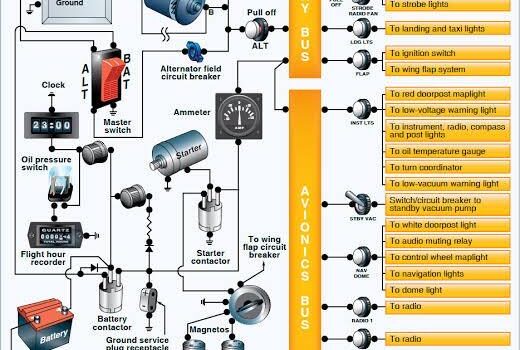
technisches Diagramm eines Avionik-Systems

🛠️ Is Your Quality System Flight-Ready?

In the world of MRO (Maintenance, Repair, and Overhaul), there is no room for „good enough.“ Every component, every CoC (Certificate of Conformity), and every manual must be 100% compliant.

The Challenge: Many companies struggle with the transition from production quality to maintenance quality (Part 145). The requirements for documentation and traceability are immense.

The SKQC Solution: We don’t just audit; we evaluate your internal systems to find bottlenecks before the official authority does.

  • ✅ Gap Analysis: Where do you stand compared to EASA/FAA requirements?
  • ✅ Process Stability: Ensuring that „Intern & Extern“ quality levels are identical.

Is your documentation ready for the next level? Let’s perform a system health check. [Link skqc.org]

#MRO #AviationMaintenance #QualityAudit #Part145 #SKQC #ZDF #AerospaceSafety

Live from Sun ’n Fun 2026: The Future of Aviation Quality

Live from Sun ’n Fun 2026: The Future of Aviation Quality

I’m spending the week in Lakeland at the Sun ’n Fun Aerospace Expo. While the airshows are breathtaking, the real magic happens in the details: the components, the avionics, and the standards that keep us safe.

The Trend: The industry is moving faster towards integrated Avionics Systems and advanced MRO (Maintenance, Repair, Overhaul) solutions. This requires a new level of supplier oversight.

Whether it’s Part 21G or Part 145 compliance, staying updated is not optional—it’s the ticket to the game.

Are you at the Expo? Let’s connect and talk about how these trends affect your next audit!

#SunNFun #AerospaceInnovation #SKQC #FloridaAviation #MRO #AviationSafety

Happy Easter

🍀 Don’t Leave Your Quality to Luck!

Happy Easter! While we all enjoy the traditional egg hunt today, „searching“ for quality is the last thing you should do in a professional supply chain.

At SKQC, we believe that excellence is built on data, clear standards, and rigorous auditing—not on luck. Relying on „finding“ errors after production is a costly strategy.

Our approach:

  • 🔍 Internal Evaluations: Finding gaps before they become risks.
  • 🌍 External Audits: Ensuring your global suppliers meet the highest standards.

Let’s trade the luck of the search for the certainty of a proven system.

Visit [skqc.org] to see how we stabilize your processes.

#SKQC #QualityManagement #SupplierAudit #NoLuckJustData #Easter2026 #AerospaceQuality