EASA EPAS 2026: 129 Active Safety Actions — What Does This Mean for Your Quality System?

The European Union Aviation Safety Agency has published its European Plan for Aviation Safety (EPAS) for 2026 — the 15th edition. The numbers are clear: 129 active safety actions are currently in place, 15 of them are new additions introduced in 2026. 31 actions were completed in 2025.

That sounds like progress. And it is — on a regulatory level.

But let me be direct: for OEMs, Tier-1 and Tier-2 suppliers, these 129 actions are not an abstract policy document. They are a compliance roadmap — and most organizations are significantly underprepared for what is coming.

What EPAS 2026 Actually Signals for Supplier Quality

Three structural shifts stand out, based on my reading of the 2026 edition:

1. Regulatory Simplification — But Not Where You Think

EASA has officially launched a Rule Simplification Programme under EPAS 2026, with the stated goal of reducing administrative burden and making regulations easier to implement. The first dedicated rulemaking activities targeting simplification are planned to launch in 2026, with at least one completed by 2028.

This sounds like good news for suppliers. It is — eventually. In the short term, simplification means transition periods, revised Acceptable Means of Compliance (AMC), and updated interpretations of existing standards. Organizations that interpret ’simplification‘ as a signal to reduce audit rigor will be making a costly mistake. Regulatory transitions are precisely when gaps widen and non-conformities accumulate.

2. Workforce Competency as a Systemic Safety Risk

EPAS 2026 has formally elevated workforce availability to a strategic priority — and added a new section to Volume I titled ‚Availability of Competent Aviation Personnel.‘ The language is unusually direct: unless the aviation industry addresses this challenge, the level of aviation safety may degrade in the long term.

From a Quality Management perspective, this is significant. Workforce competence is not an HR topic — it is a process stability issue. When organizations operate with undertrained personnel in quality-critical positions, the result is not just individual errors. It is systemic non-conformance that is difficult to detect and even harder to correct through audit alone. EN9100 Section 7.2 addresses this directly. The question is whether organizations treat it as a checkbox or as a genuine risk assessment.

3. New Safety Issues Added to the Safety Risk Portfolio

Two new safety issues were introduced to the EPAS Safety Risk Portfolio in 2026: in-flight fires in inaccessible areas, and out-of-spec synthetic aviation turbine fuels (SATF) in operations. Both have direct implications for material qualification and supplier management.

If your organization supplies parts or assemblies relevant to either of these domains and your risk assessment has not been updated accordingly, that is a gap that will surface in the next audit cycle.

What This Means in Practice — 3 Concrete Actions

→ Review your SMS (Safety Management System) against the updated EPAS Volume II actions. Specifically check whether your organization’s corrective action process covers the two new safety issues (SI-9011 and SI-0060).

→ Audit your competency matrix. Not the document — the reality behind it. Who in your quality-critical positions was trained more than 3 years ago and has not been reassessed?

→ Map your AMC documentation to the Simplification Programme timeline. If your current compliance structure is built on AMC interpretations that are scheduled for revision by 2028, you need a transition plan — not a reaction plan.

The Bigger Picture

EASA does not publish EPAS as background reading. It publishes it as a forward-looking signal to industry. The 15 new actions in 2026 represent areas where the agency has identified insufficient control. For quality professionals and supplier managers, that is the most important information in the document.

The question is not whether you are aware of EPAS 2026. The question is whether your internal systems are structured to respond to it — proactively, not reactively.

That distinction — between compliance awareness and compliance readiness — is where quality failures are born.

📌 Want to assess your organization’s audit readiness against EPAS 2026 requirements? Let’s talk.

👉 Request a Technical Consultation → www.skqc.org

#AviationQuality #EASA #EPAS2026 #SupplierManagement #QualityManagement #EN9100 #AuditReadiness #ComplianceManagement #AviationSafety #SKQC

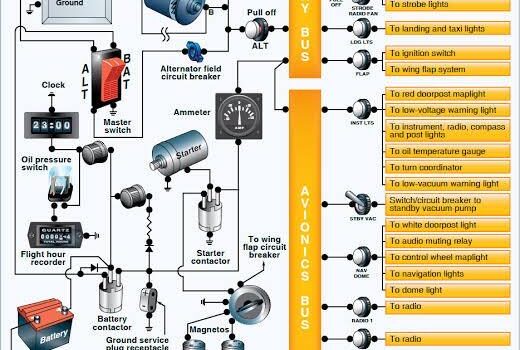
technisches Diagramm eines Avionik-Systems

🛠️ Is Your Quality System Flight-Ready?

In the world of MRO (Maintenance, Repair, and Overhaul), there is no room for „good enough.“ Every component, every CoC (Certificate of Conformity), and every manual must be 100% compliant.

The Challenge: Many companies struggle with the transition from production quality to maintenance quality (Part 145). The requirements for documentation and traceability are immense.

The SKQC Solution: We don’t just audit; we evaluate your internal systems to find bottlenecks before the official authority does.

  • ✅ Gap Analysis: Where do you stand compared to EASA/FAA requirements?
  • ✅ Process Stability: Ensuring that „Intern & Extern“ quality levels are identical.

Is your documentation ready for the next level? Let’s perform a system health check. [Link skqc.org]

#MRO #AviationMaintenance #QualityAudit #Part145 #SKQC #ZDF #AerospaceSafety

BMW Full Carbon Body

🏎️ Precision in Every Fiber: Why Material Quality Matters

As a „Carbon Fiber Guy,“ I’ve always been fascinated by materials that push the limits—like the ones in the BMW M-Series or high-performance aircraft wings.

But high performance comes with high responsibility. Composite materials like carbon fiber require extremely stable processes. A flaw that is invisible to the eye can be catastrophic under stress.

Why specialized audits are key:

  • Invisible Defects: Composite materials require a process that prevents flaws before they happen. Quality is a proactive build, not a reactive check.
  • Listening to the Pulse: Just as BMW creates masterpieces by listening to the „M-Community,“ we achieve excellence by listening to the Data (ZDF – Numbers, Data, Facts).
  • The Result: We translate complex requirements into stable supplier output. In the end, data-driven decisions are the only way to ensure high-performance results.

Let’s optimize your composite supply chain. Quality is in the detail. [Link skqc.org]

#CarbonFiber #BMWM #ZDF #DataDriven #QualityAssurance #AerospaceEngineering #SKQC

Ein sauberes, technisches Bild (z.B. Dokumente mit EASA/FAA Siegel-Anmutung oder das "Standards vs Laws" Bild).

🇪🇺🇺🇸 Navigating the Regulatory Sky: EASA vs. FAA

For suppliers operating globally, harmonizing European (EASA) and US (FAA) requirements is one of the biggest challenges. It’s about more than just paperwork; it’s about Regulatory Integrity.

Key Focus Areas for 2026:

  • 📄 Documentation: Correct CoC/CoA handling is the backbone of traceability.
  • 🛠️ MRO Standards: Bridging the gap between Part 145 and global maintenance expectations.
  • 📉 Risk-Based Auditing: Moving from „checking boxes“ to real process security.

At SKQC, we provide the specialized aviation quality support you need to navigate these complexities.

Source: Check the latest Safety Briefs at [easa.europa.eu] or [faa.gov].

Looking for an audit that actually adds value? Let’s discuss your current compliance status.

#AviationCompliance #EASA #FAA #QualityAuditor #SKQC #ZDF #AerospaceSupplyChain

Live from Sun ’n Fun 2026: The Future of Aviation Quality

Live from Sun ’n Fun 2026: The Future of Aviation Quality

I’m spending the week in Lakeland at the Sun ’n Fun Aerospace Expo. While the airshows are breathtaking, the real magic happens in the details: the components, the avionics, and the standards that keep us safe.

The Trend: The industry is moving faster towards integrated Avionics Systems and advanced MRO (Maintenance, Repair, Overhaul) solutions. This requires a new level of supplier oversight.

Whether it’s Part 21G or Part 145 compliance, staying updated is not optional—it’s the ticket to the game.

Are you at the Expo? Let’s connect and talk about how these trends affect your next audit!

#SunNFun #AerospaceInnovation #SKQC #FloridaAviation #MRO #AviationSafety

Happy Easter

🍀 Don’t Leave Your Quality to Luck!

Happy Easter! While we all enjoy the traditional egg hunt today, „searching“ for quality is the last thing you should do in a professional supply chain.

At SKQC, we believe that excellence is built on data, clear standards, and rigorous auditing—not on luck. Relying on „finding“ errors after production is a costly strategy.

Our approach:

  • 🔍 Internal Evaluations: Finding gaps before they become risks.
  • 🌍 External Audits: Ensuring your global suppliers meet the highest standards.

Let’s trade the luck of the search for the certainty of a proven system.

Visit [skqc.org] to see how we stabilize your processes.

#SKQC #QualityManagement #SupplierAudit #NoLuckJustData #Easter2026 #AerospaceQuality

Quality Innovation, Supplier Future

Future-Proofing Quality: Emerging Trends in Aviation Supplier Management

As aviation evolves, supplier management must anticipate trends like AI integration and geopolitical shifts.

„Proactive adaptation is essential,“ states Dieter Gust (source: SKQC Forecast Series, February 2026).

Trends to watch:

  1. AI for predictive quality control.
  2. Blockchain for transparent audits.
  3. Emphasis on ethical sourcing.

Prepare your organization for tomorrow’s challenges today. To stay ahead with future-proof strategies, contact us via email at contact@skqc.org.

Tips for quality compliance in cross-border aviation supply chains. Insights from SKQC professionals.

Navigating Global Regulations: Quality Compliance in Cross-Border Supply Chains

Cross-border supply chains demand mastery of diverse regulations, from FAA to EASA. Missteps can lead to costly delays.

Expert view: „Harmonizing standards across regions is key to seamless operations“ (source: SKQC Expert Insights on Technical Documentation, February 2026).

Approaches:

  1. Map regulations to supplier capabilities.
  2. Conduct joint audits with international partners.
  3. Leverage tools for real-time compliance tracking.

Achieve global excellence without borders. Need help navigating cross-border compliance? Contact us via email at contact@skqc.org for expert guidance.

St. Patrick's Day: Don't Leave Supplier Quality to Luck

Don’t Leave Quality to Luck: St. Patrick’s Day Insights on Reliable Suppliers

St. Patrick’s Day celebrates luck, but in supplier quality, success comes from strategy, not chance. Avoid „rainbow chasing“ by focusing on verifiable processes.

„Robust audits eliminate luck from the equation,“ advises Dieter Gust (source: SKQC Discussion on Supply Chain Stability, January 2026).

Tips:

  • Conduct thorough background checks.
  • Use predictive analytics for supplier stability.
  • Foster long-term partnerships over quick wins.

Turn your supply chain into a pot of gold through diligence. For strategies to build luck-free supplier reliability, contact us via email at contact@skqc.org.

Precision in Quality Metrics

Precision Matters: Applying Pi Day Lessons to Quality Metrics in Aviation

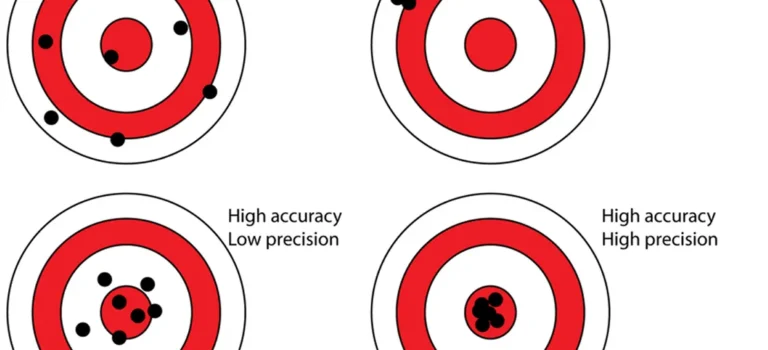
Pi Day reminds us of the beauty in precision—much like quality metrics in aviation. Infinite decimals mirror the endless pursuit of accuracy in supplier performance data.

„Metrics must be precise to avoid cascading errors,“ says Dieter Gust (source: SKQC Interview on Technical Standards, February 2026). In audits, use statistical tools to measure tolerances with pi-level detail.

Ideas to apply:

  • Calculate defect rates with advanced formulas.
  • Visualize data in pie charts for clarity.
  • Benchmark against industry pi-inspired standards.

Celebrate Pi Day by refining your quality processes for flawless results. Interested in precision training for your team? Contact us via email at contact@skqc.org to explore customized metrics solutions.